
In Part One I answered the question “Why do bears hibernate?”
If you missed it, I recommend reading that first.
Now that we know WHY bears hibernate…let us explore HOW. How do they pull off this physiological feat, and what makes bears in winter so fascinating and formidable?
Bears undergo a specialized form of hibernation, unique to bears alone. These miraculous mammals enter a low energy state (as described in Part 1). They do not eat, drink, urinate, or defecate for a period of many months. Through it all, they manage to maintain muscle mass, even though they remain in a sedentary state from roughly November to April. How do they do it?
Amazingly, bears are able to take the "waste", or urea from the metabolic process and convert it into amino acids — the building blocks of protein. This process allows muscle cells to actually grow while they rest. In this way they are able to continuously re-build their muscles, rather than experience atrophy (as humans do, even after a short period of inactivity).
Incredible, right?
The evolutionary marvel of bear physiology gets even more impressive when you consider what female bears can accomplish during the winter months. Mother bears give birth and produce milk for their cubs without eating or drinking for the entire winter.
Say what? Read that last sentence again, please. Unbelievable, isn’t it?!
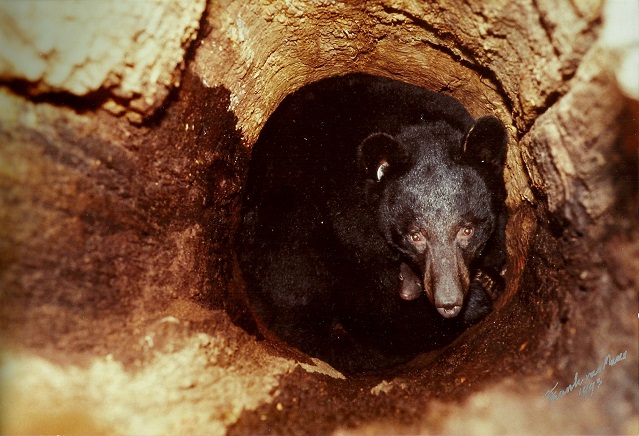
This is not what most people imagine when they picture a bear’s den, but hibernating black bears routinely den and give birth in the safe and sheltered environment of a hollow standing tree (note the young cub peeking up from under the mother). This image was captured as part of the long-running black bear study in the Great Smoky Mountains National Park (photo: Frank T. van Manen, my internship supervisor at the University of Tennessee in 1993). A common den tree species was Tulip Poplar (also known as Tulip Tree, Liriodendron tulipifera), a fact that has stayed with me as I recommend this wonderful native tree to clients in New England 20+ years later.
“Female bears give birth and produce milk for their cubs without eating or drinking for the entire winter. ”
These physiological feats are so unparalleled, that even NASA has funded studies of hibernating bears in an effort to better understand how to induce artificial hibernation states in astronauts during deep space missions to Mars, and even how to develop cryosleep chambers, an advance that could make the science fiction scenes from Alien, a reality.
I'll be staying here on Earth with the bears, thank you very much. I'll stay here and reminisce about my former life as a roving field biologist crawling into bear dens — remembering that feeling of being in that deep, dark hole, all alone with mama bear and her cubs. I remember it like it was yesterday, the sound of her slow heartbeat, the smell of cedar bark lining her bed, and the muffled voices of the rest of the bear crew, just outside the den entrance waiting for me to hand out the cubs.
In those precious moments I was in complete awe of the quiet miracle of hibernation, of mama bear nursing her cubs through the winter on an empty stomach. Each time, I was flooded with an almost overwhelming sense of gratitude that I was able to witness — so intimately — a true miracle of nature.
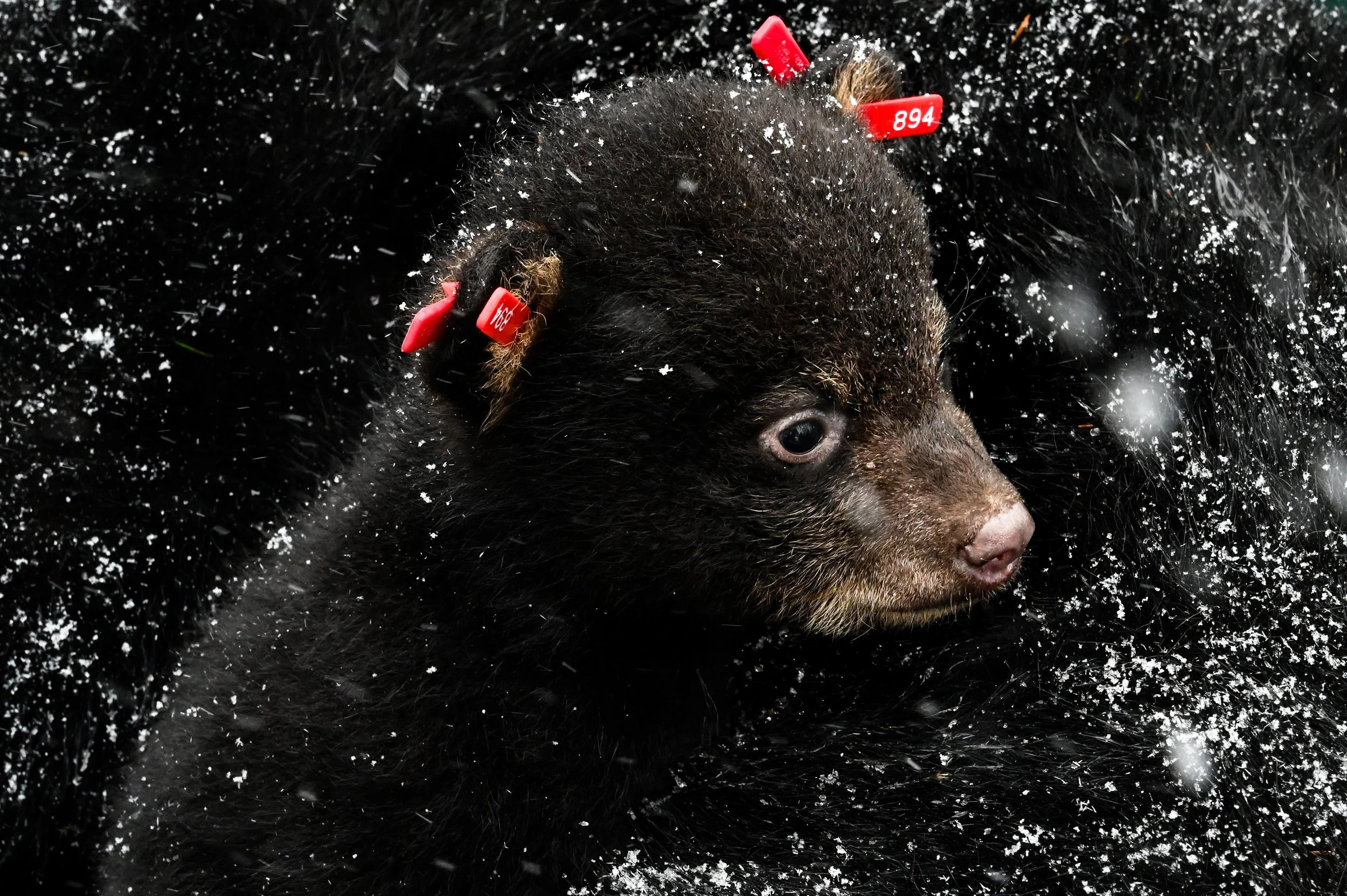
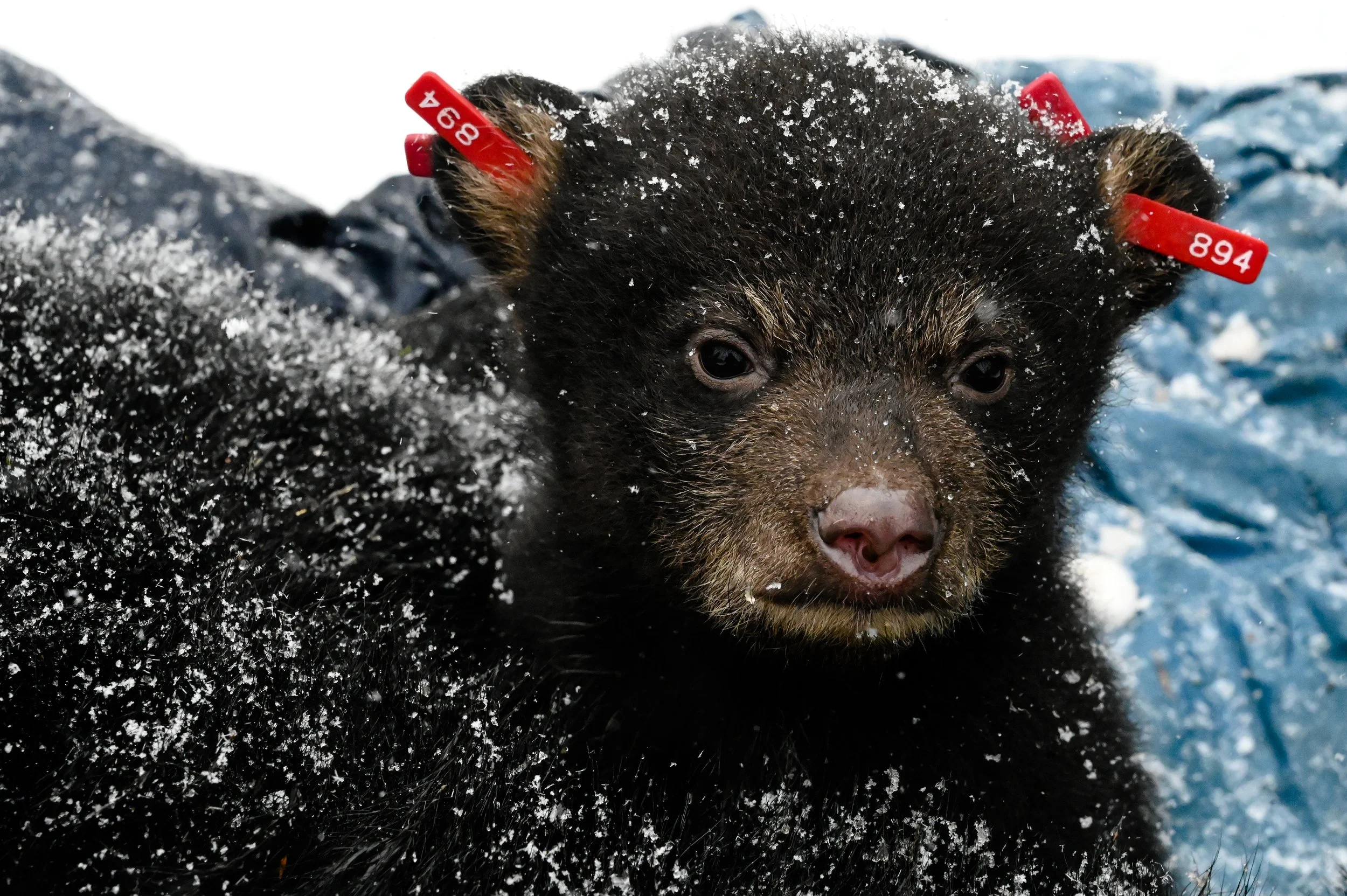
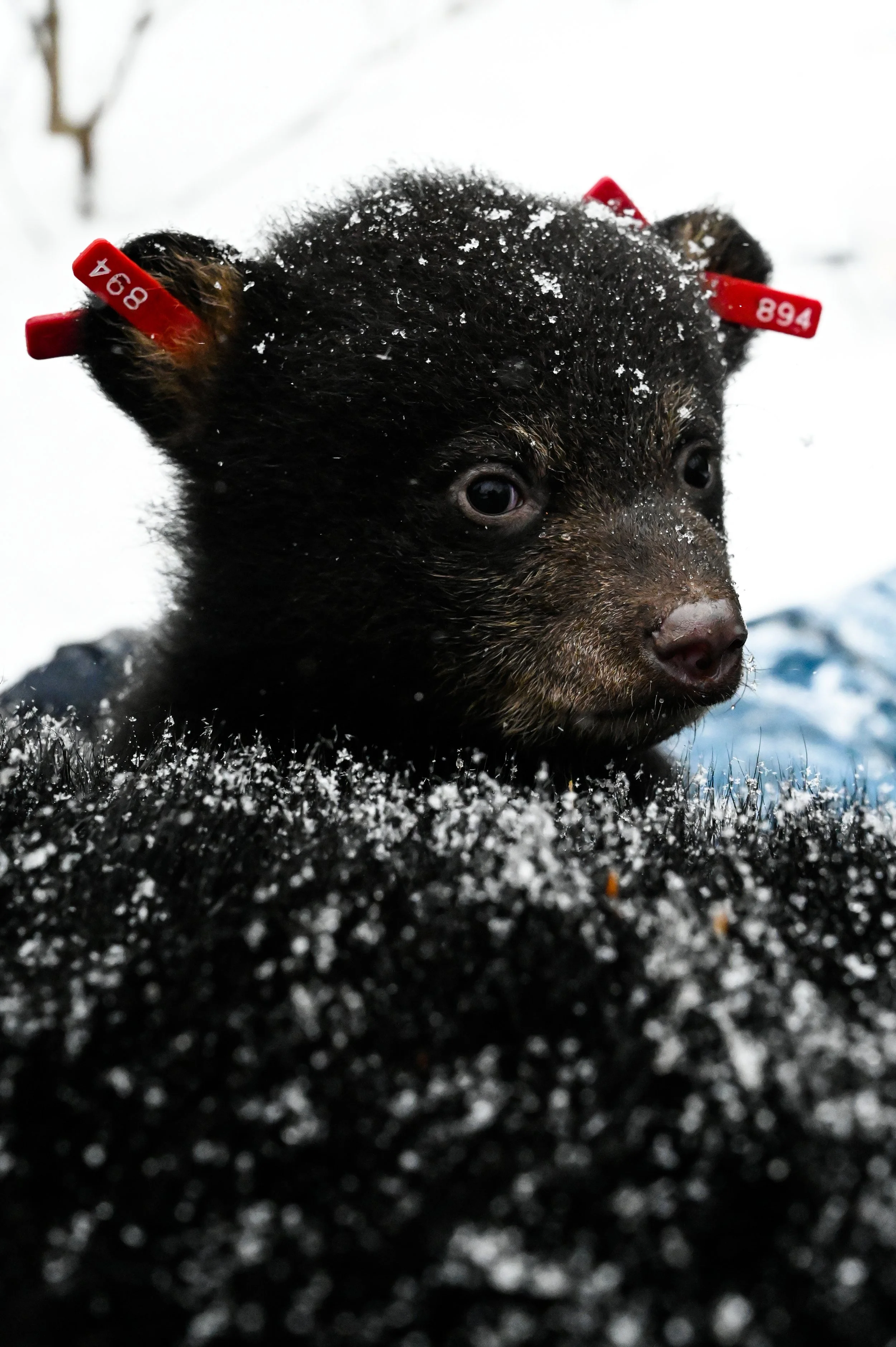
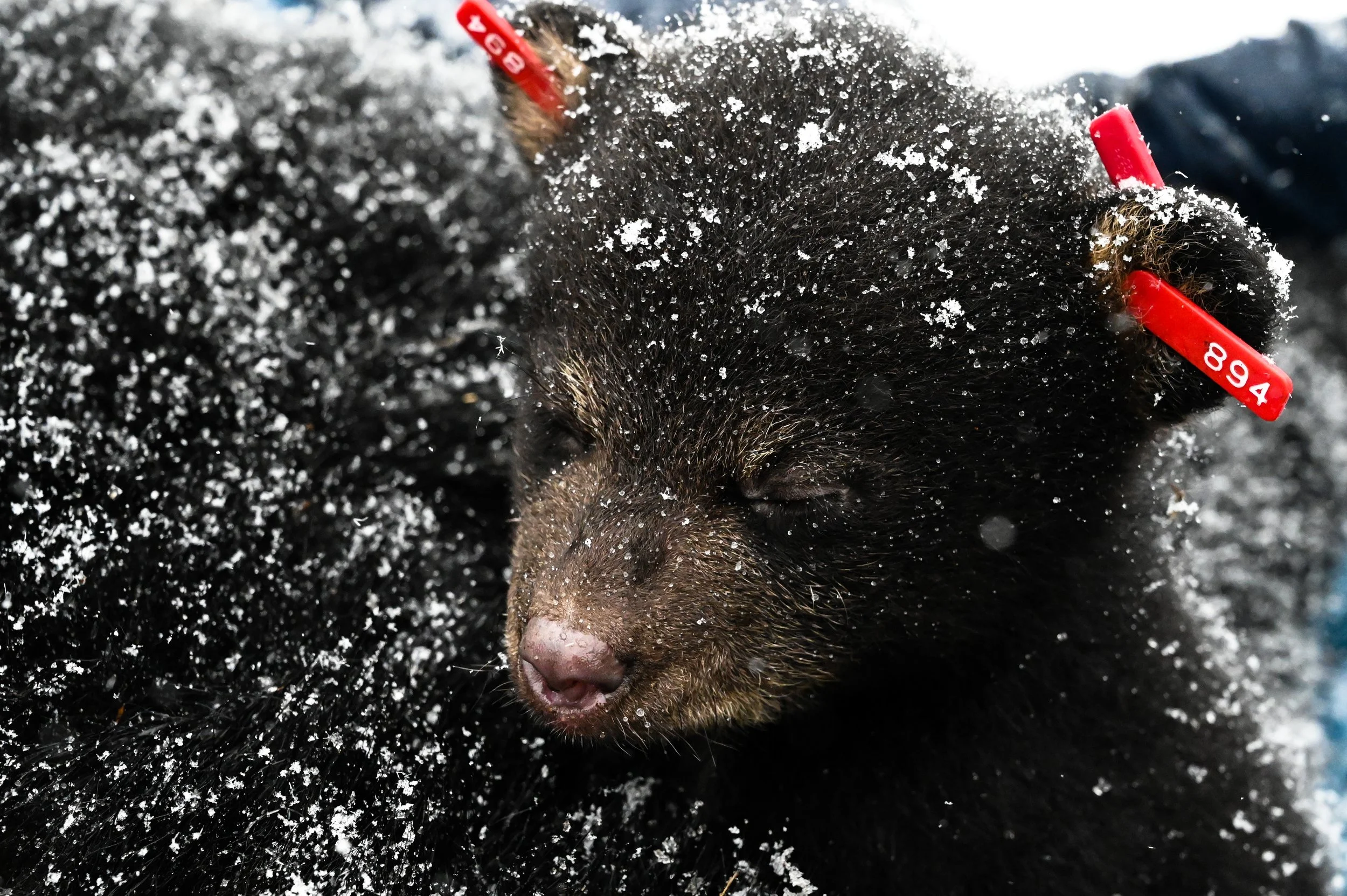
cub photos courtesy of Maine Department of Inland Fisheries & Wildlife
You might be wondering….
Why was I in a bear den? Why was I taking the cubs out of the den? Why do those cubs have ear tags?
In the 1990s I worked on a number of black bear studies and visited winter dens to help collect reproductive and survival data. Read more about this work in my blog essay about beechnuts, and the DownEast article below.
Want to delve even deeper into the magical, marvelous world of bear hibernation?
Ron Joseph — my dear friend and mentor — penned this exceptional article for DownEast Magazine.
Important PSA! As soon as the weather turns warm, or even during mid-winter warm-ups, take down your birdfeeders so you don’t create a human-bear conflict. These conflicts put yourself at risk, and are very bad for bears. Learn more…
subscribe to my newsletter below. You’ll RECEIVE free tips, tools, and insights for building habitat & Hope, as well as advance notice of my signature events!

The Personal Ecologist
I co-create biodiverse habitats with eco-minded stewards throughout the Northeast - at any scale.
I have 30 years of experience and a lifelong commitment to wildlife conservation.
Read My Story.
-
Deborah
Perkins
- Jul 31, 2026 Beautiful Buttonbush in Bloom
- Jul 11, 2026 Baby Bats Need Love Too: How to Benefit Bats in Your Home Habitat
- Jul 2, 2026 How do Bird Eggs Hatch? Mother Nature's "Escape Room"
- Jun 8, 2026 Maine's Real Lupine Revealed
- May 14, 2026 Shadbush in Bloom
- May 12, 2026 Saving Songbirds Starts with Your Morning Coffee
- May 1, 2026 Native Nectar for Queen Bumble Bees
- Apr 25, 2026 Waves of Warblers
- Apr 12, 2026 Bees on Red Maple Flowers
- Mar 23, 2026 How do bears hibernate? Bears in Winter Part 2
- Feb 7, 2026 Why do bears hibernate? Bears in Winter Part 1
- Feb 5, 2026 Plan Your Habitat Garden
- Jan 17, 2026 The True Harbingers of Spring: Chickadees
- Jan 8, 2026 Carnivore Coexistence (Leopold's Wise Words - Part 1)
- Dec 14, 2025 Dead and Dying Trees are Key to Life
- Oct 31, 2025 Hallowed Habitat
- Apr 3, 2025 Give a Warm Welcome to Wild Bees (Super-pollinators Part 2)
- Jan 28, 2025 Beechnuts - Superfood for Bears & Other Wildlife
- Dec 22, 2023 Storm Habitat: Nurse Logs, Dens, and More
- Jun 18, 2023 Bring the Magic of Fireflies Back Home Again
- Jun 17, 2023 Snapping Turtles on the Move
- Mar 20, 2021 The Power of Photoperiod
- Feb 19, 2021 The Golden-crowned Kinglet: A Royally Charming Winter Resident
- Feb 8, 2021 Subnivean Secrets
- Jan 9, 2021 Wild Reads: Ravens in Winter
- Oct 23, 2020 Flower “Beds” for Bumble Bees
- Oct 4, 2020 Wise Oaks, Clever Jays
- Sep 11, 2020 Goldenrods: Top Plants for Boosting Biodiversity
- Aug 25, 2020 Gentle Golden Wasps Adorned with Pollen
- Aug 1, 2020 Water for Wildlife - Birdbath Basics & More
- Jul 19, 2020 Fruits of the Forest
- Jul 11, 2020 Hungry Little Hummingbirds
- May 31, 2020 Wild Geranium in Flower
- May 24, 2020 Moosewood Chandeliers
- Apr 19, 2020 Attracting Bluebirds without Boxes
- Apr 12, 2020 Hungry Bears on the Move
- Mar 27, 2020 Sky Dancing
- Mar 22, 2020 Fox Kits Being Born
- Mar 15, 2020 Corvids a-Courtin’
- Mar 8, 2020 Phenology Notes: Witnessing The Seasons of our Wild World
- Jan 2, 2019 Wild Reads: We Took to The Woods
- Nov 28, 2018 Winterberry: The Gift that Keeps on Giving
- Aug 16, 2018 Where Have All the Whip-poor-wills Gone?
- May 16, 2018 The Wonder of Wild Bees (Super-pollinators Part 1)
- Mar 21, 2018 Wildlife Habitat Design in A Wounded World
- Feb 16, 2018 “Intelligent Tinkering” - How to Boost Biodiversity at Home (Leopold’s Wise Words Part 2)
- Nov 14, 2017 A Top Threat to Biodiversity: Invasive Plants
